Roofing services / Leeds

Tiling

Concrete interlocking, clay plain tile or pantile, laid new or relaid from reclaimed stock. We tile roofs across Leeds and the surrounding areas, and we match existing coverings so an extension or repair disappears into the original.

Prefer to talk it through? 07565 301143

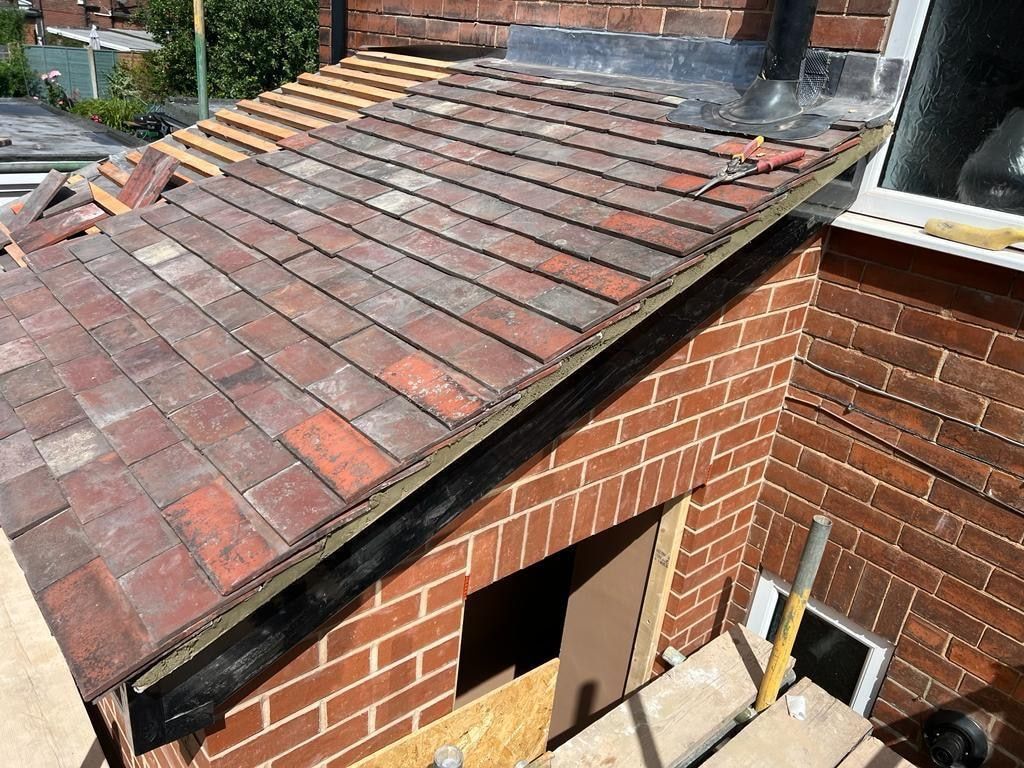
Weathered clay plain tiles relaid on a small pitched roof with black flashing details and a lead slate around the flue

The right tile for the building

Tile covers a lot of ground. Concrete interlocking tiles are the workhorse: single lap, economical, and suited to the lower pitches most modern roofs are built to. Clay plain tiles are small, laid double lap on a steeper pitch, and nothing else gives a roof the same texture. Pantiles sit between the two, a single-lap tile with a rolled profile that throws a strong shadow line.

A large share of the housing around Leeds carries concrete interlocking tile laid from the mid twentieth century onwards, while the older streets typically carry clay or slate. We fit all of it, new or reclaimed, and we let the pitch, the exposure and the weight the timbers can carry decide the specification, not the price list.

Our approach

A tiled roof fails at its edges long before it fails in the middle, so the edges get the attention. Verges are finished with a dry-fix system or bedded and pointed properly. Ridges and hips are bedded and mechanically fixed, as current standards require. Flashings at chimneys and abutments are cut and dressed in lead.

On extensions and repairs the match matters as much as the fixing. We identify the existing profile, source tile that sits right against it, and set our gauge and courses to the original. A repair you can see from the street is a repair done twice.

Relaying reclaimed clay tile

Old clay tile is often worth more on the roof than in a skip. When a roof comes off, we sort the covering by hand: tiles that ring true are stacked for relaying, and anything laminated or frost-damaged goes. Relaying the originals over new membrane and treated battens keeps the character of the roof, and on older properties it is usually the right way to do the job. We make up any shortfall with matched reclaimed stock and agree the approach with you before a tile is lifted.
From the scaffold

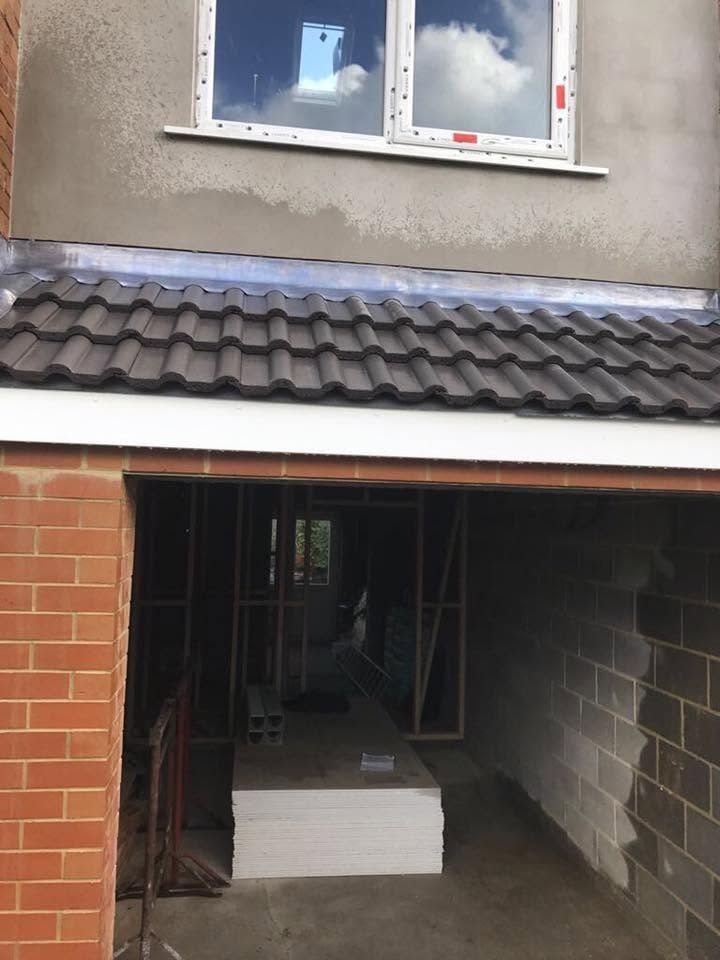
Charcoal double roman tiles and new lead apron flashing over an extension, with timber studwork and blockwork visible in the opening below
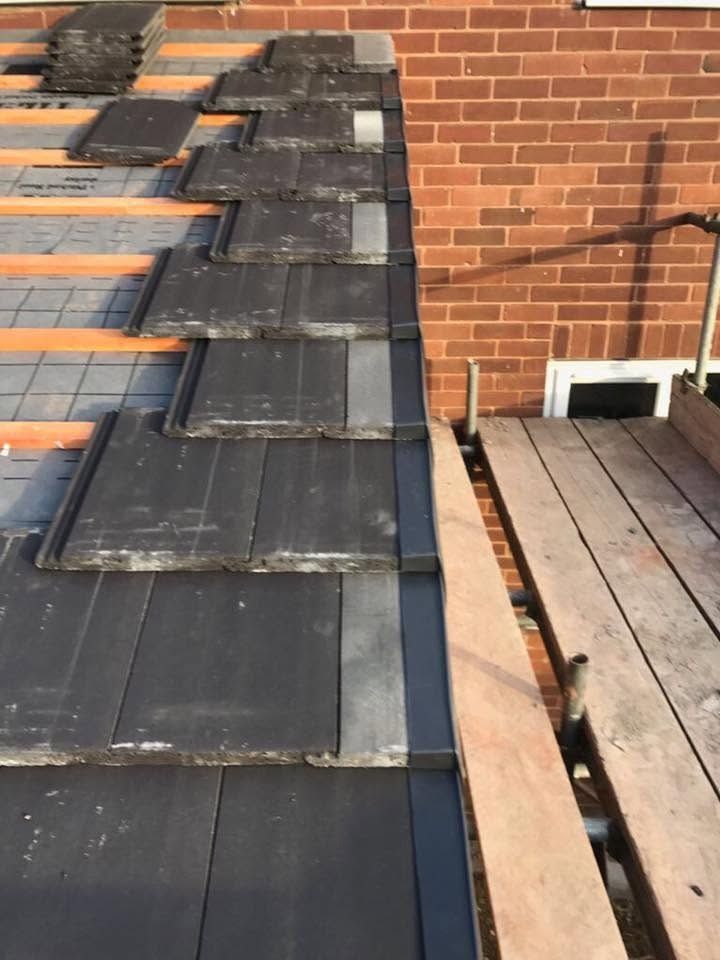
Interlocking concrete tiles being laid over new battens and membrane, with a neat lead abutment dressed against red brickwork
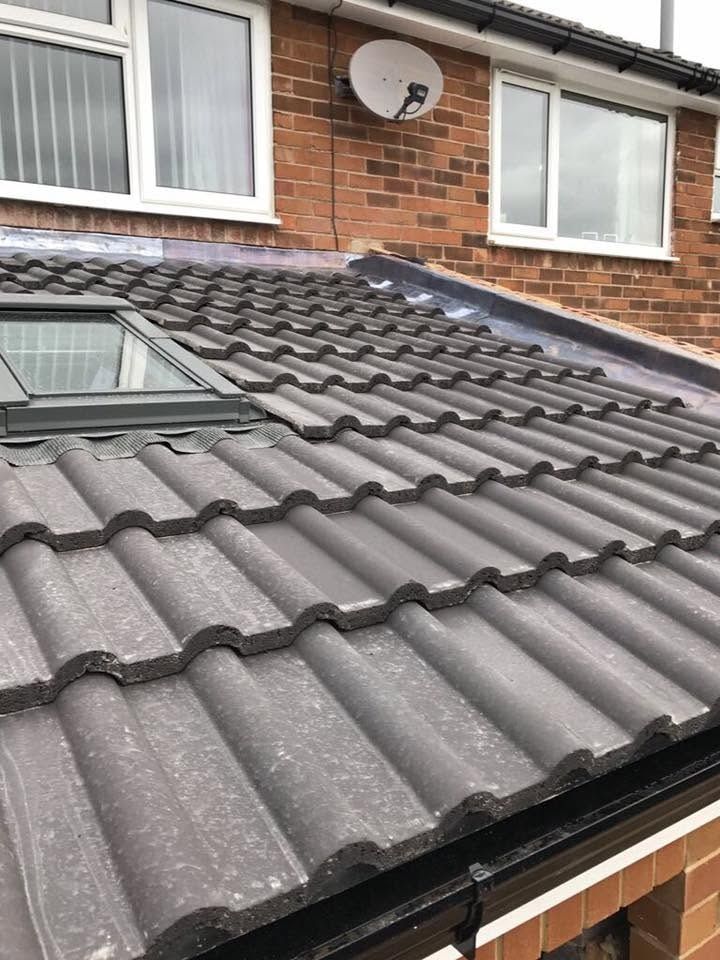
Completed grey tiled roof with a newly fitted Velux window and lead flashing dressed to the main house wall
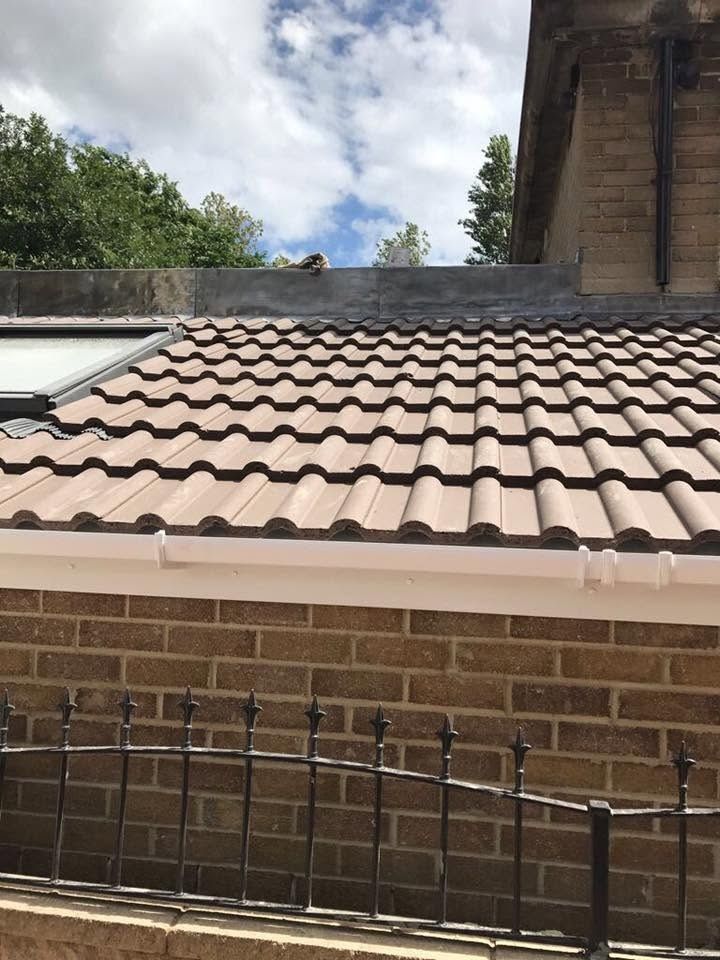
Buff double roman tiled roof with a grey Velux window, white fascia and lead parapet flashing under a blue sky
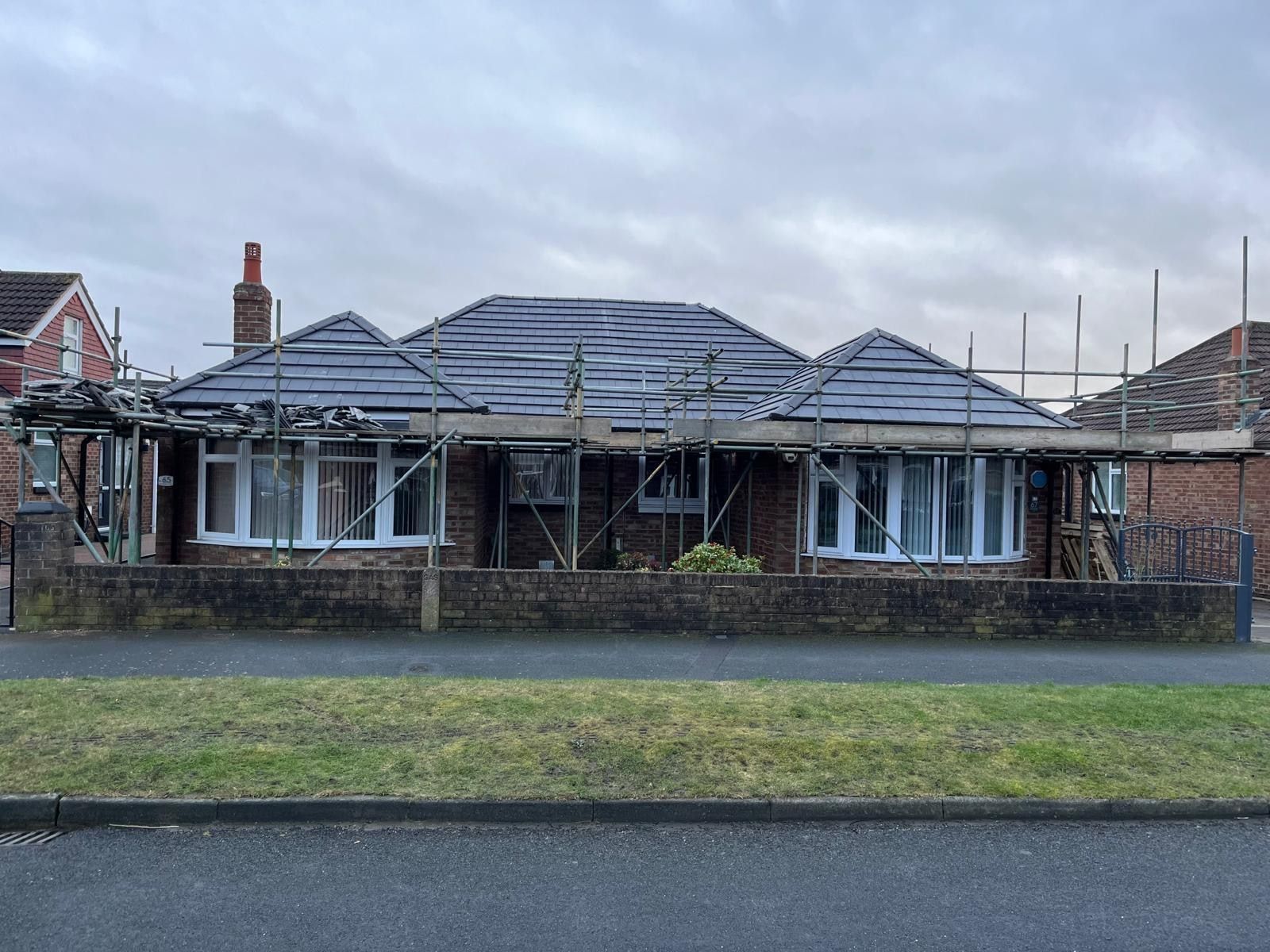
Full front elevation of a detached bungalow with newly laid anthracite tiles across three hipped roofs, scaffold still in place

Questions we are often asked

Can you match the tiles on my existing roof for an extension?

Usually, yes. We take a sample tile away, identify the profile and the maker where the tile is marked, and source new or reclaimed stock to suit. Where a profile is discontinued we go to reclamation yards, and where only new tile is available we choose the closest match and let it weather in, which most do within a few years.

Should I choose concrete or clay?

Concrete is more economical, copes with lower pitches, and is the sensible choice for most modern roofs. Clay costs more but holds its colour for life because the colour is fired into the tile rather than applied to the surface, and on an older property it is usually the right answer. We will tell you which suits your roof and why.

My ridge tiles keep coming loose. Why does re-bedding not fix it?

Mortar on its own cracks with thermal movement and wind load, so a ridge bedded and left at that will work loose again. Current fixing standards require ridge and hip tiles to be mechanically fixed as well as bedded. We bed them and screw or clip them, which is why the repair holds.

Are my old clay tiles worth saving?

Often, yes. A sound clay tile rings true when tapped and shows no lamination or frost damage; a spent one sounds dull and sheds its face. We sort the covering by hand during the strip and tell you before work starts roughly what proportion we expect to relay.

Need tiling in Leeds?

Send us a few details and a photo if you have one, and we will come back with an honest assessment.