Roofing services / Leeds

Slating

Slate outlasts every other pitched covering when it is laid properly, and fails early when it is not. We work in new natural slate and reclaimed Yorkshire stone slate, from straightforward re-slates to heritage roofs laid in diminishing courses.

Prefer to talk it through? 07565 301143

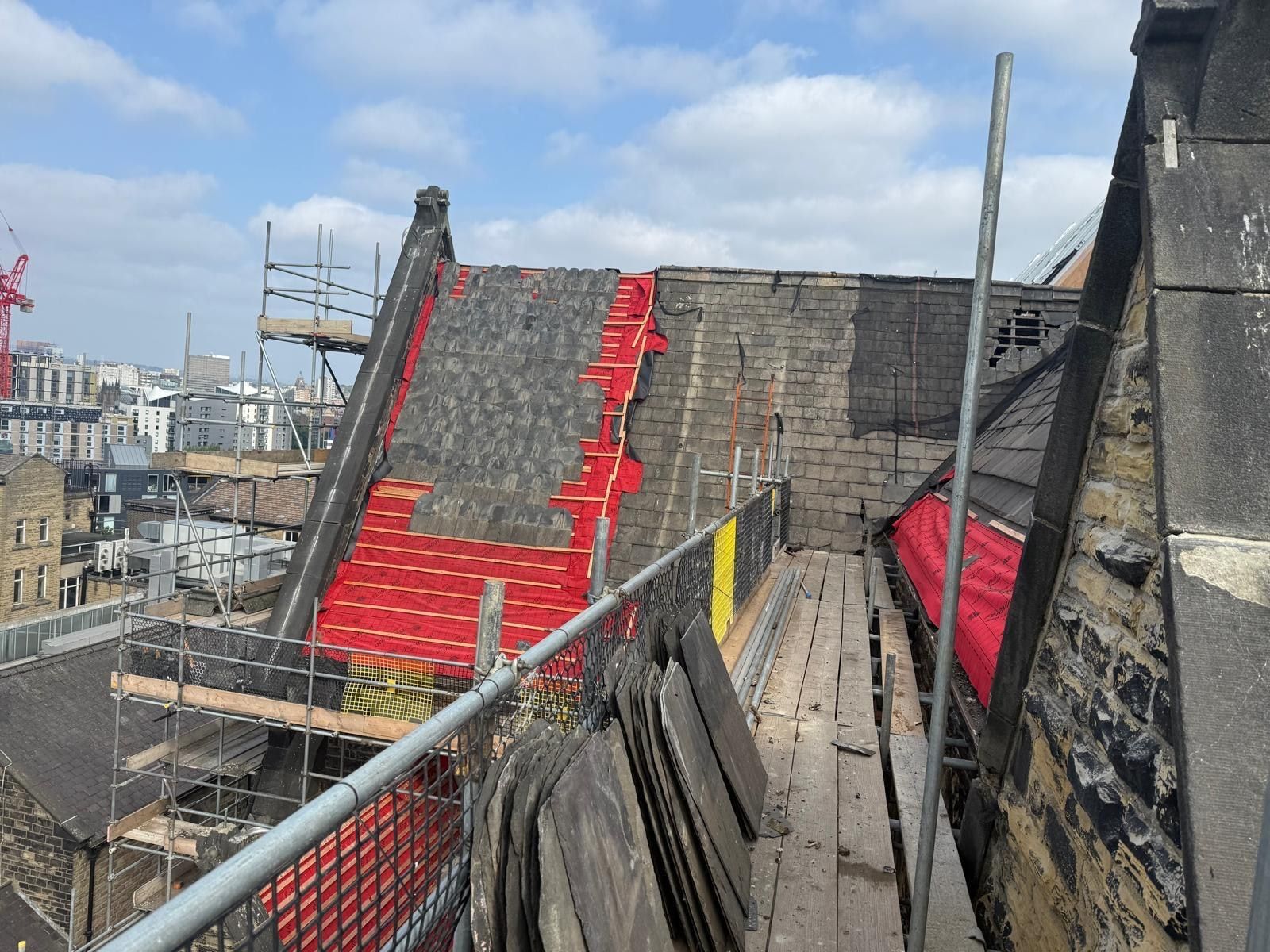
Reclaimed stone slates being relaid over red membrane on a large heritage roof, with the city skyline and a tower crane beyond

Slate fails at the fixings, not the slate

A good slate roof is the longest-lived pitched covering there is. Slate laid in the Victorian period is often still sound today; what fails is everything holding it on. Nails fatigue, battens soften, and slates begin to slip one at a time until every winter costs another call-out.

The older streets across Leeds were widely roofed in natural slate, and many stone-built properties carry Yorkshire stone slate, thick sandstone flags laid in courses that shrink as they climb to the ridge. Both can usually be saved. Sound slates come off carefully, get sorted and re-holed, and go back on new battens with new fixings, made up with matching reclaimed stock where the count falls short.

Our approach

Slating is a trade of margins. The headlap, the amount each slate covers the one two courses below it, is what actually keeps the water out, and it has to increase as the pitch drops and the exposure rises. We set the lap and gauge for the roof in front of us. Every slate is fixed with two nails, and every slate is checked by ring before it goes on: a clean note means sound, a dull one means the skip.

On stone slate roofs we grade by size, laying the heaviest flags at the eaves and working up in diminishing courses to the smallest at the ridge, the way these roofs were always built. It is slower than uniform slating, and it is the only correct way to do it.

Heritage and conservation work

Older buildings, churches among them, need a covering that matches what came off: same stone, same coursing, same weathered face to the street. We source reclaimed Yorkshire stone slate and sort it for thickness and colour so the finished roof reads as original rather than repaired.

Where a building is listed, altering the roof covering usually needs consent, and conservation officers generally expect like-for-like. We work to that expectation as standard, and we will tell you plainly when a cheaper substitute would harm the building rather than help it.
From the scaffold

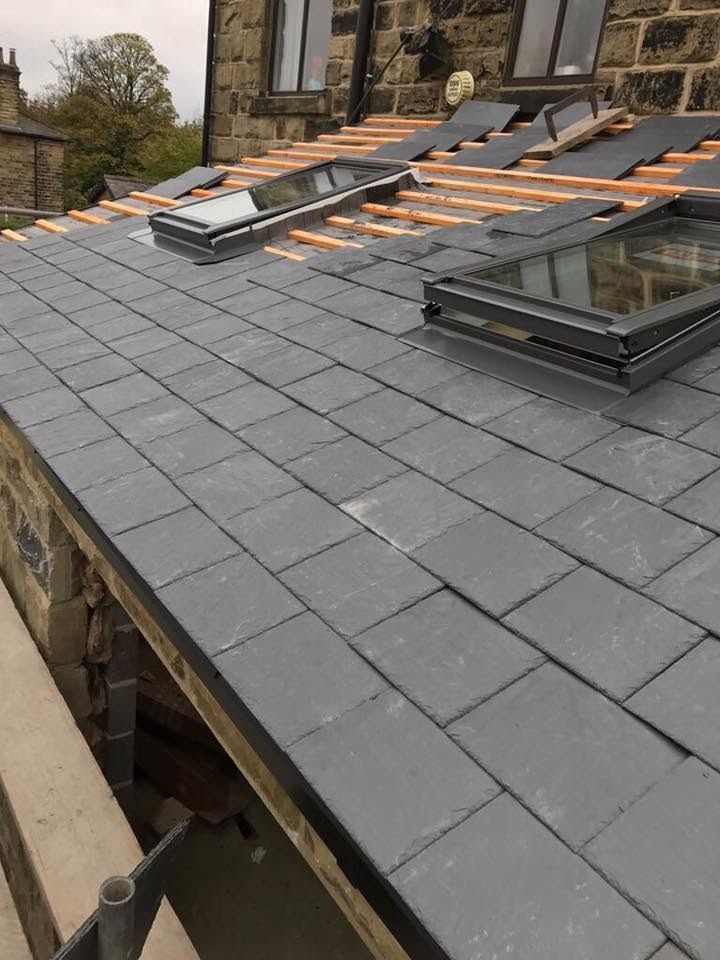
Natural blue-grey slate being laid across a stone-built house, with two conservation rooflights fitted and battens exposed above
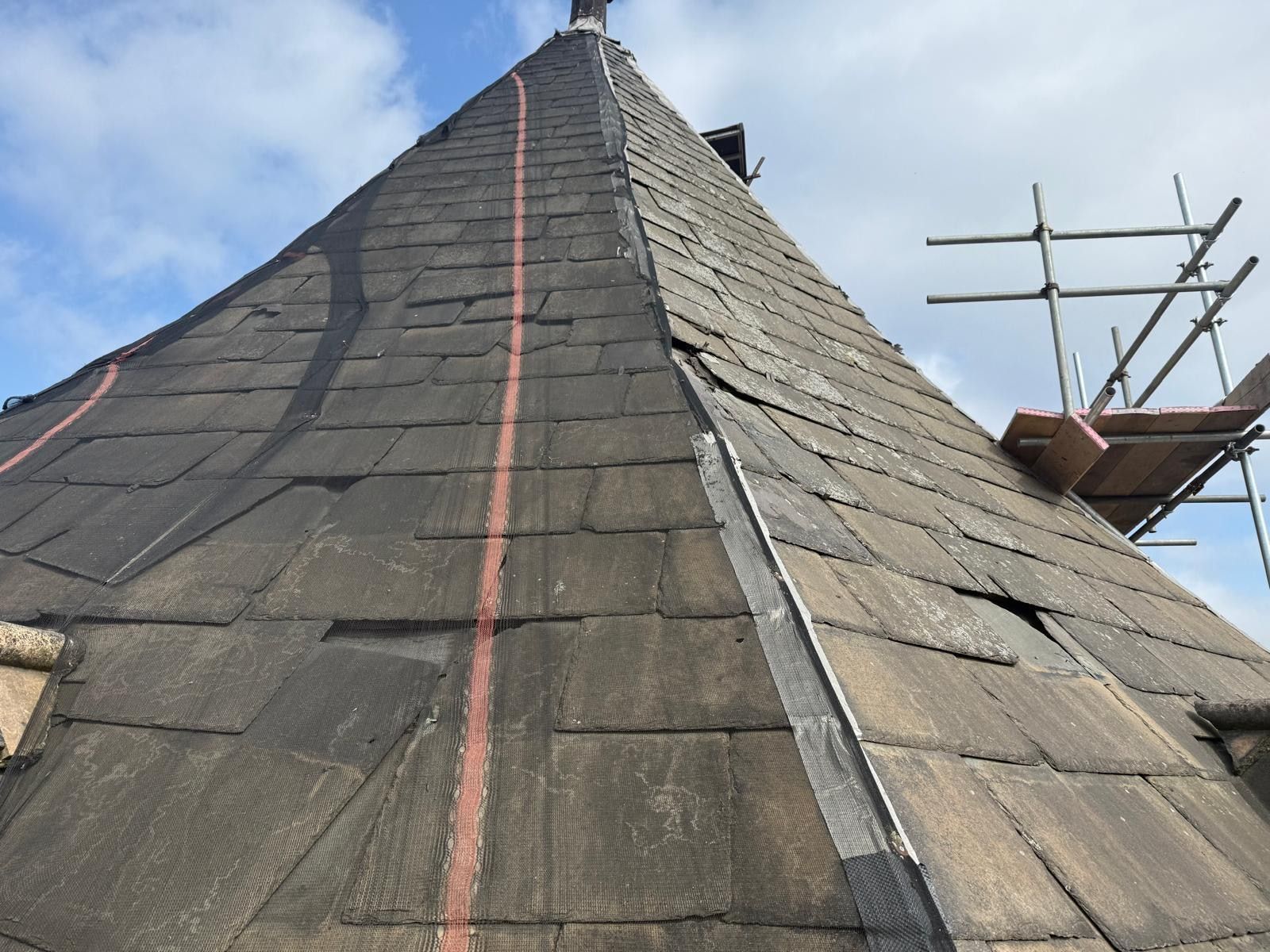
Steeply pitched heritage roof in weathered stone slate, one slope stripped to membrane with setting-out lines and a lead hip roll
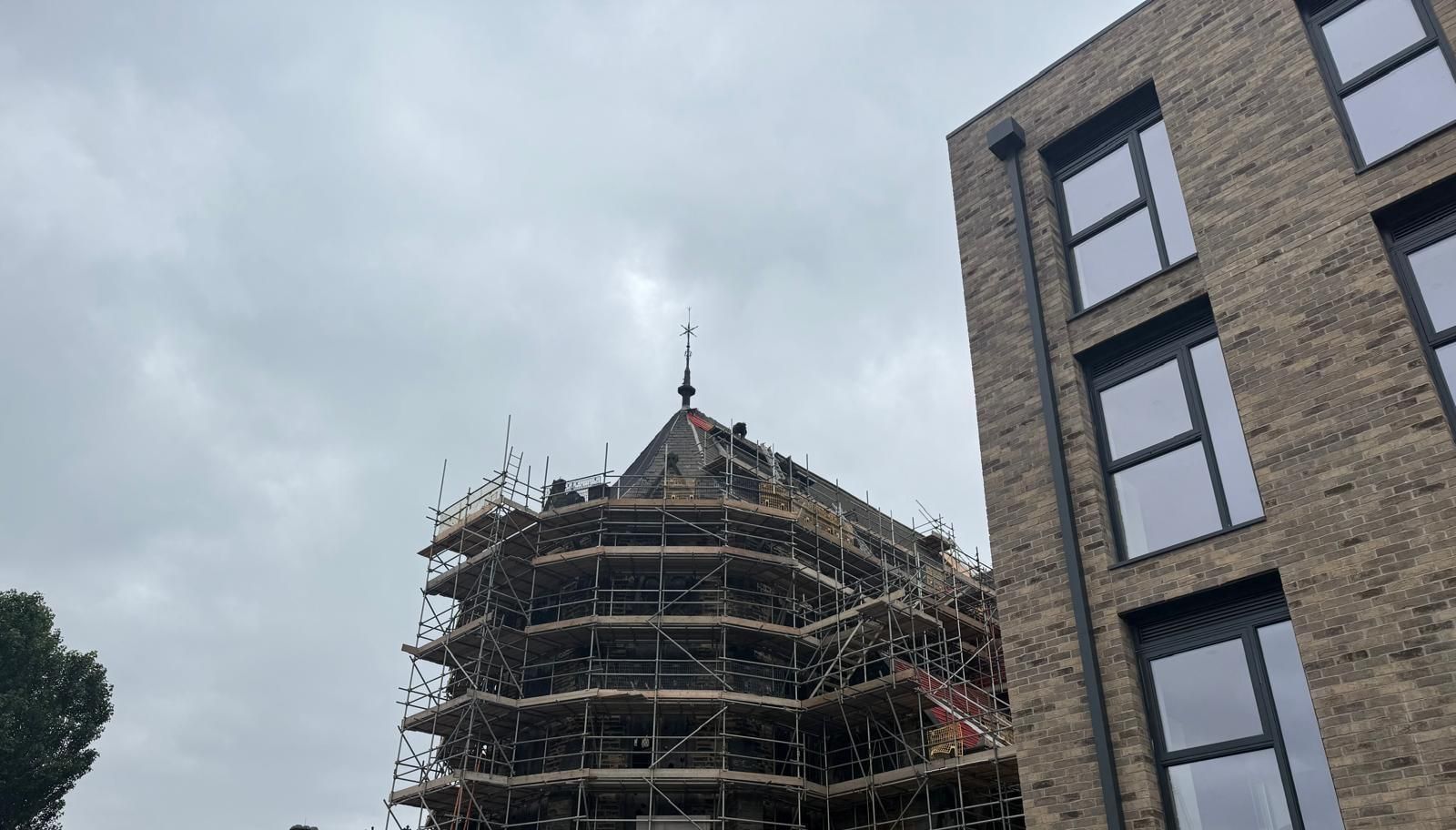
Large Victorian stone building wrapped in multi-lift scaffold to its spire, seen against a broad grey sky
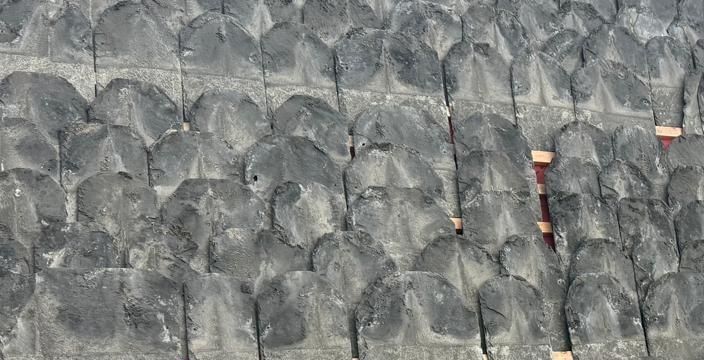
Close texture of heavy random stone slates hung in diminishing courses over red membrane
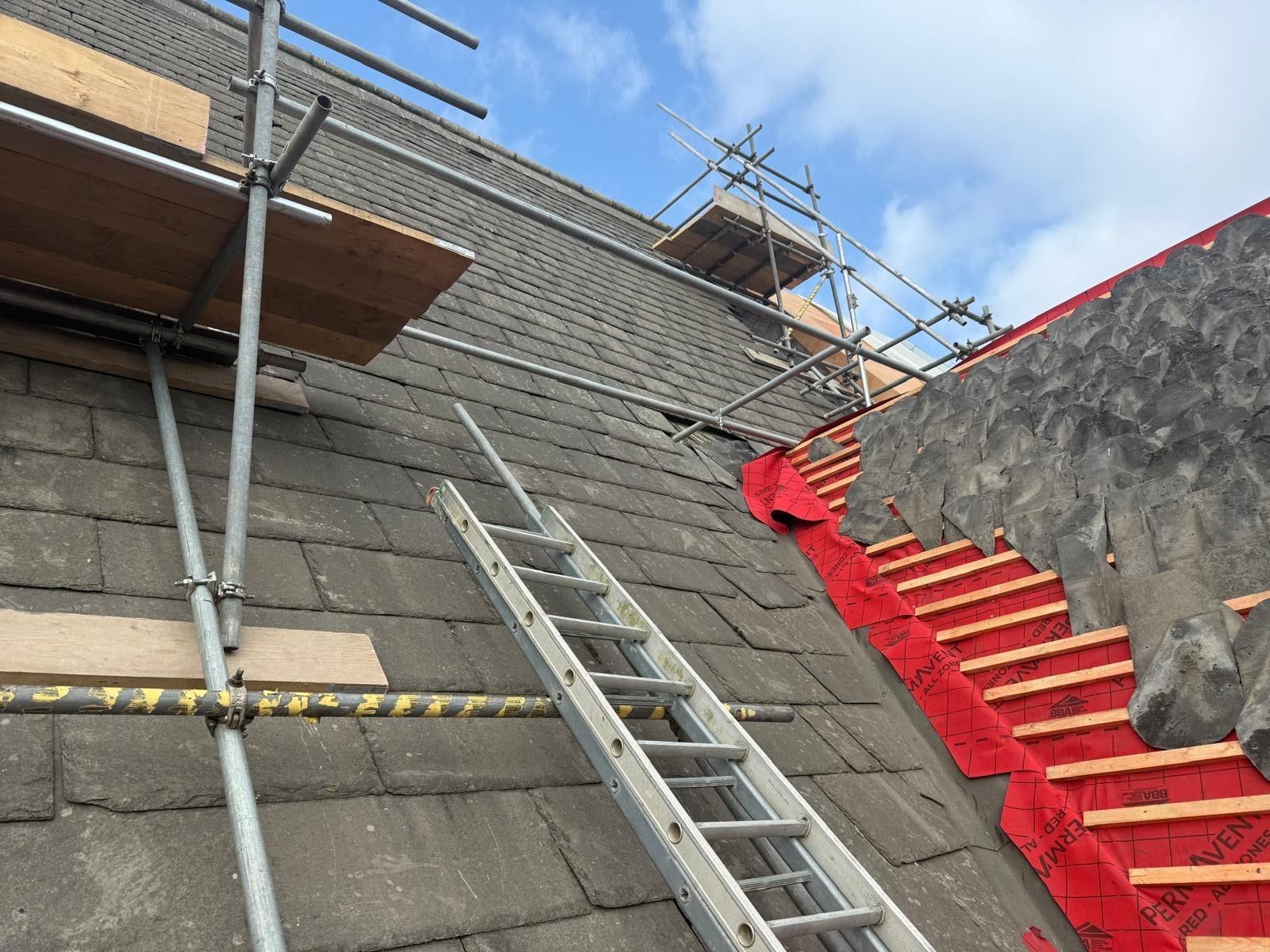
Heritage roof slope part way through re-slating, old stone slates on one side and new battens with slates being laid on the other

Questions we are often asked

What is the difference between natural slate and Yorkshire stone slate?

Natural slate is a fine-grained metamorphic rock, split thin and laid to a uniform size and gauge; most of what you see on older terraces is Welsh or Spanish. Yorkshire stone slate is riven sandstone, far thicker and heavier, laid in diminishing courses with the largest flags at the eaves. They are different trades in practice, and a roofer used to one is not automatically competent in the other.

Why do slates keep slipping off my roof?

Almost always nail fatigue. The original iron or steel nails rust through while the slates themselves are still sound, so the covering gets blamed for the failure of its fixings. One or two slips can be repaired, but when slates come away across the whole roof the right call is a strip and re-lay on new battens with non-ferrous nails.

Can my existing slates be re-used?

Usually a good proportion can. Slate that rings clean when tapped and shows no delamination goes back on the roof with new fixings; anything soft, flaking or cracked is set aside. We sort on the scaffold and tell you what has survived before ordering matching stock to make up the difference.

Do you take on church and listed building slating?

Yes, we take on heritage slating. On listed buildings, changes to the roof covering usually need listed building consent, and the expectation is normally like-for-like replacement. We match weathered stone slate from reclaimed stock and lay it in diminishing courses so the roof keeps its original character.

Is slate more expensive than tile?

Per square metre, yes. New natural slate costs more than concrete tile, and reclaimed stone slate more again. Against that, a properly fixed slate roof has the longest service life of any pitched covering, so over the life of the building it is rarely the expensive option.

Need slating in Leeds?

Send us a few details and a photo if you have one, and we will come back with an honest assessment.